
Artemis Weekly Digital Finance Fundamentals 2026.3.6
This week we cover the geopolitical events, market volatility following U.S. strikes in Iran, record-breaking BTC ETF flows, Strategy's Stretch, and the surge in prediction market activity.
Market Overview: The Weekly Recap
Welcome back to Artemis’ Weekly Digital Finance Fundamentals!
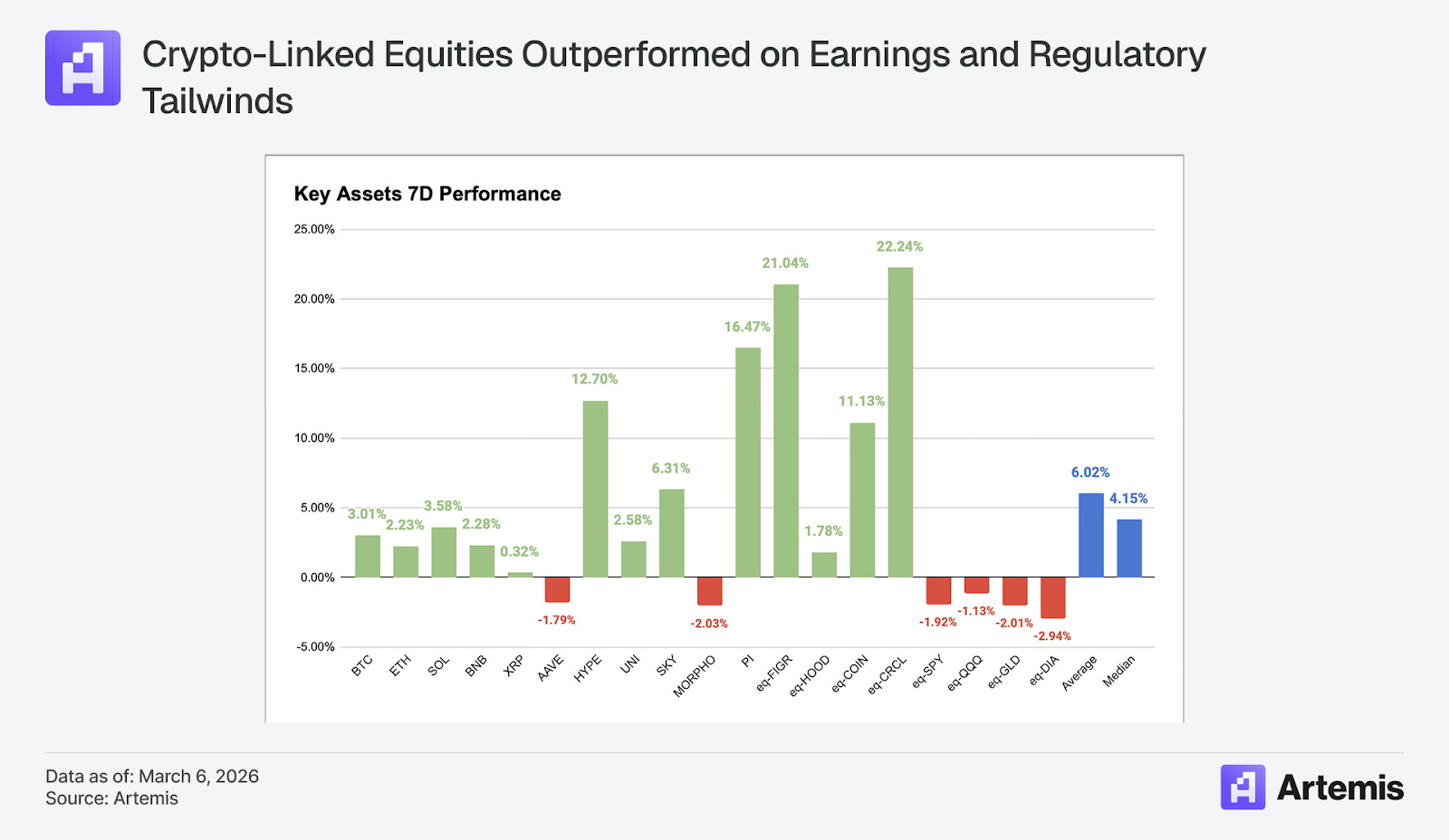
This week broke from the slow grind lower of recent weeks. The U.S. struck Iran over the weekend, BTC dipped to ~$63,000 on Saturday, then short-squeezed back to $73,000 by midweek before fading to ~$71,000 by Friday close, up +3% on the week. SOL (+3.6%) led the majors, ETH (+2.2%) and BNB (+2.3%) tracked closely. PI (+16.5%) ripped off its February all-time low as traders front-ran Pi Day (March 14) and a potential Kraken listing, though the structural overhang looms large: 187.5 million tokens unlock this month alone, with only 9.4B of a 100B total supply currently circulating.
Crypto-linked equities outperformed tokens this week. CRCL (+22.2%) extended its post-Q4 earnings rally ($770M revenue, +77% YoY) with Citi naming it a top pick. FIGR (+21%) bounced off its post-earnings ATL after releasing strong February operating metrics showing consumer loan marketplace volume up ~20% MoM and YLDS stablecoin traction. COIN (+11.1%) surged after Trump publicly sided with the crypto industry over banks on the CLARITY Act stablecoin yield dispute, with Armstrong visiting the White House ahead of the post.
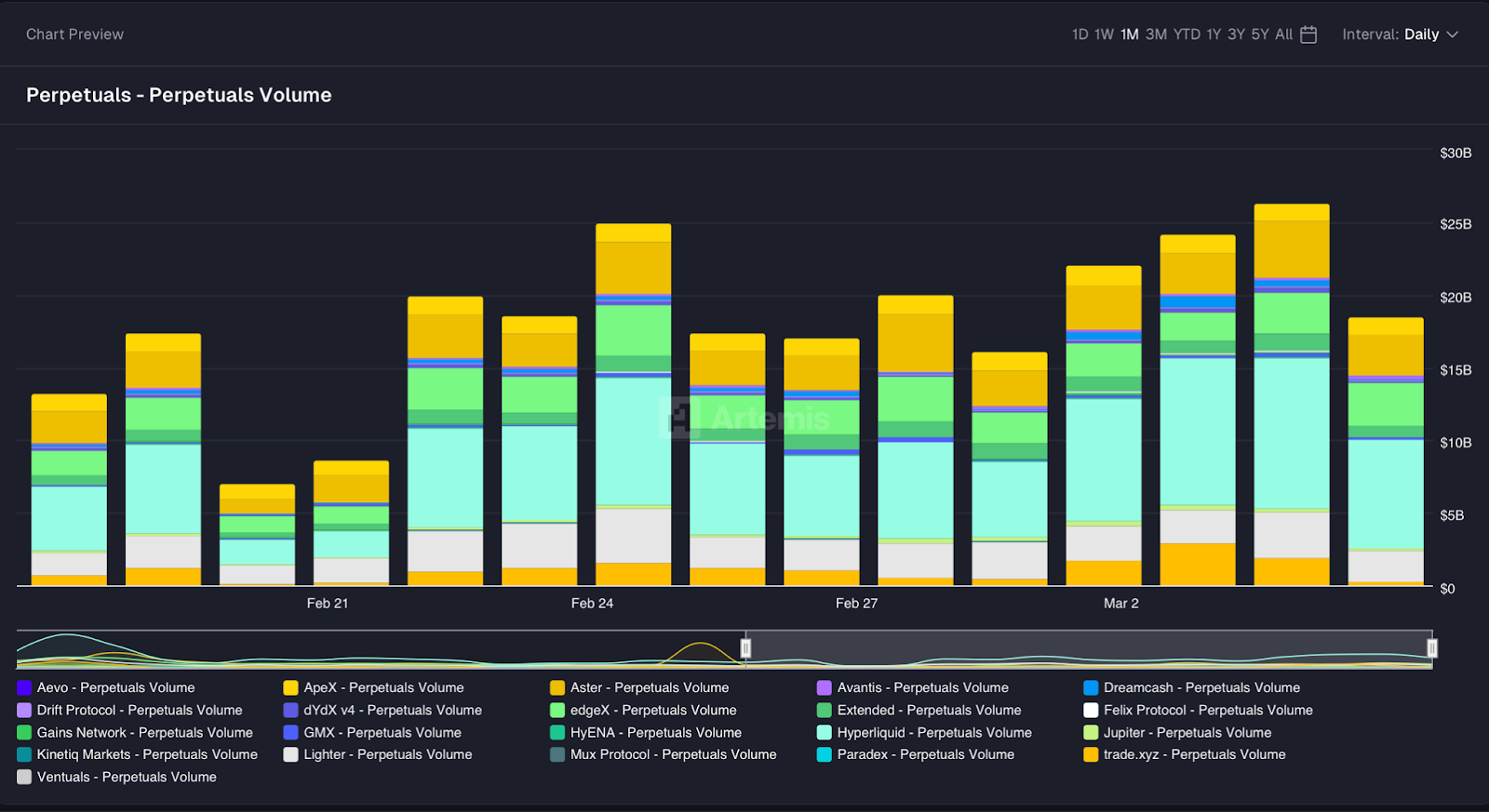
HYPE processed $9.6B in 24h perp volume (+37% WoW) as the war-weekend proved the case for always-on onchain venues when TradFi was closed. RWA kept grinding: tokenized U.S. Treasuries crossed $11B, up 22% YTD. On the mining side, Core Scientific (CORZ) locked in a $500M–$1B Morgan Stanley facility to convert its mining sites to AI data centers and plans to liquidate its entire BTC portfolio to fund the pivot, joining Bitdeer and MARA in the ongoing miner exodus from BTC to compute.
Today We Highlight:
Polymarket Pulls Record Volume as Iran Conflict Drives Prediction Market Activity
Highest BTC ETF Inflows In 2026
Strategy’s STRC saw explosive volume as shares traded above $100 par value.
1. Polymarket Pulls Record Volume as Iran Conflict Drives Prediction Market Activity
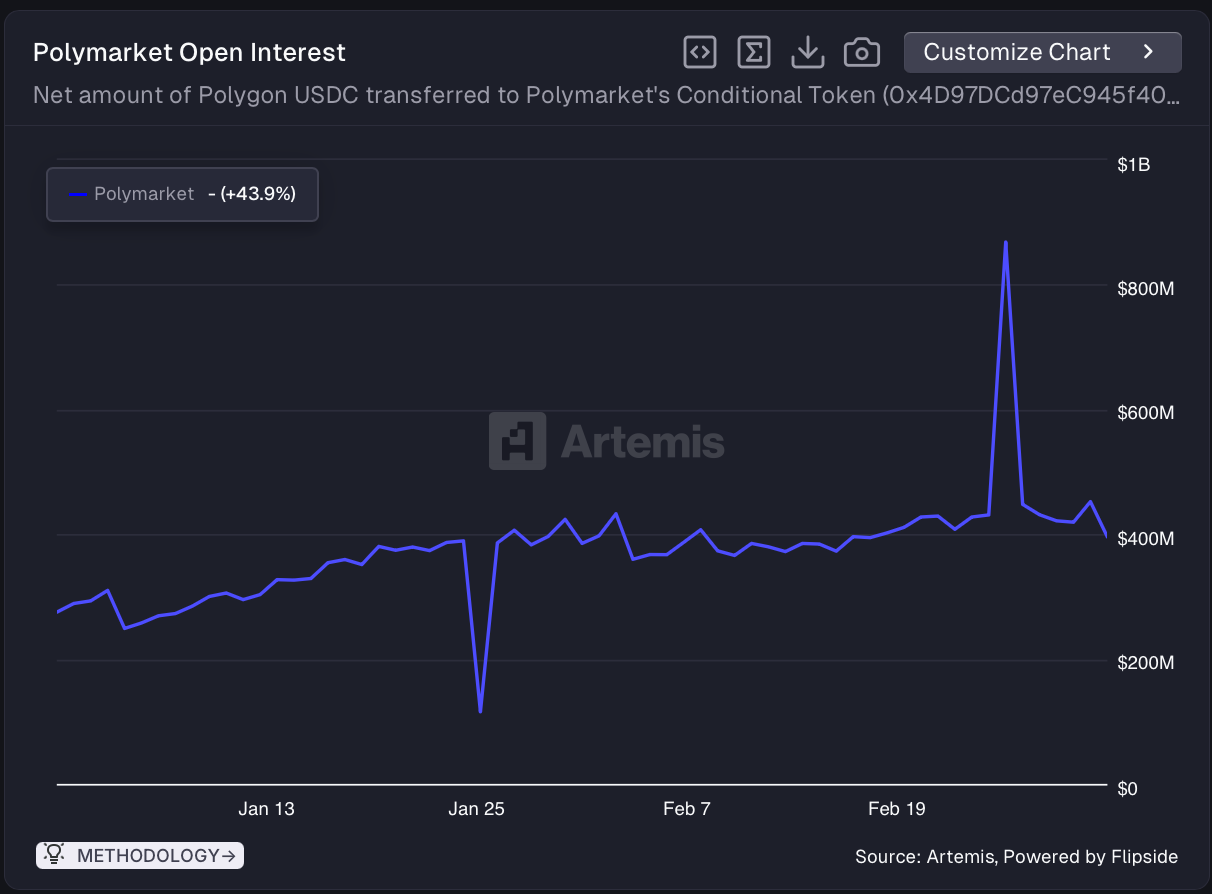
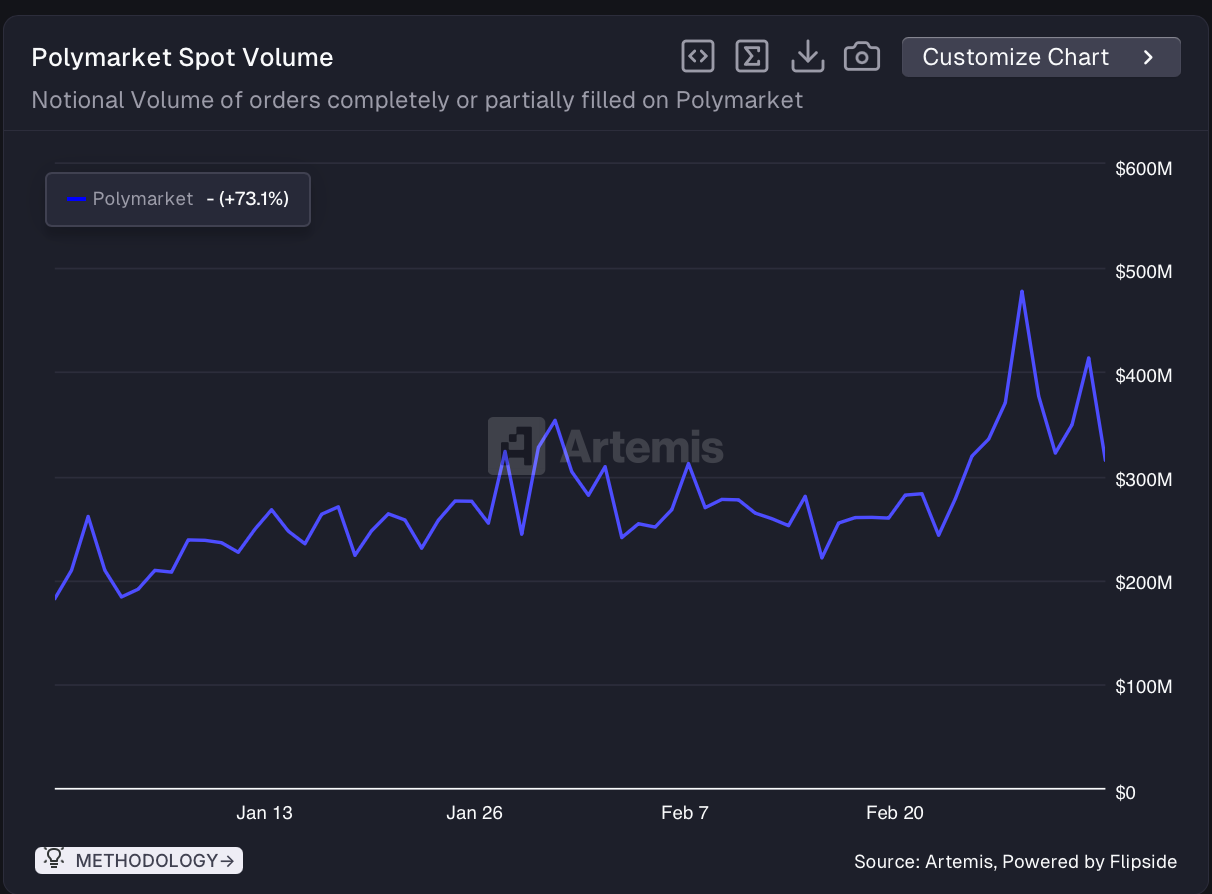
Within hours of U.S. and Israeli strikes landing in Iran on Saturday, Polymarket spun up over 200 active markets covering ceasefire timelines, regime change, and Strait of Hormuz closure. The flagship “US strikes Iran by...” contract pulled $529 million in total volume, making it one of the largest single markets in the platform’s history. A separate market on Khamenei leaving power by March 31 resolved at 100% after Iranian state TV confirmed his death, drawing $45 million in volume and the top trader cleared $757,000.
But the scrutiny has centered on activity before the strikes: onchain analysts flagged six wallets that netted $1.2 million by betting on a U.S. strike on February 28, the exact day it occurred, with most wallets funded within 24 hours of the attack. A separate account made $553,000 betting on Khamenei’s removal just before the Israeli strike that killed him. Under U.S. commodity trading law, profiting from bets tied to death and violence is illegal, but most of the activity occurred on Polymarket’s offshore platform, outside the reach of U.S. regulators.
The regulatory picture is layered. The same week this played out, CFTC Chairman Selig said prediction market guidance is coming “in the very near future.” State gambling regulators are simultaneously pressing their own authority. The Trump administration dropped two Biden-era federal investigations into Polymarket, while Donald Trump Jr. serves as an adviser to the platform and his fund 1789 Capital is an investor. Polymarket settles in USDC which means the prediction market boom is quietly one of the larger demand drivers for onchain stablecoin infrastructure as well.
2. BTC Records Highest Net Flows
Going into the week, spot Bitcoin ETFs had bled $4.5 billion YTD across six consecutive weeks of outflows. Then the tape flipped: $1.7 billion in inflows since February 24, with March 5 marking the strongest single day since the outflow streak began (~$500 million, 10 of 11 funds positive). The reversal lasted one day, with $227.9 million in net outflows returned by end of session, but the inflows appear to be outright bullish bets rather than basis trades.
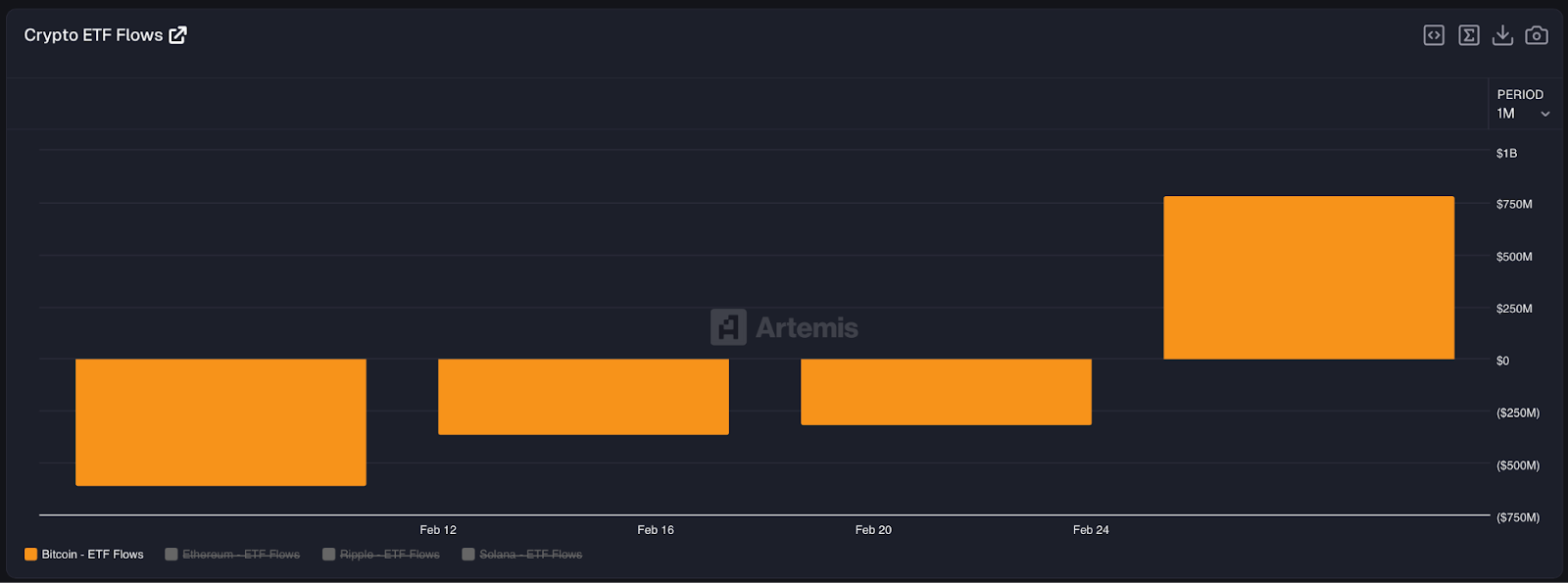
The macro case for why those flows could sustain runs directly through the Iran conflict.
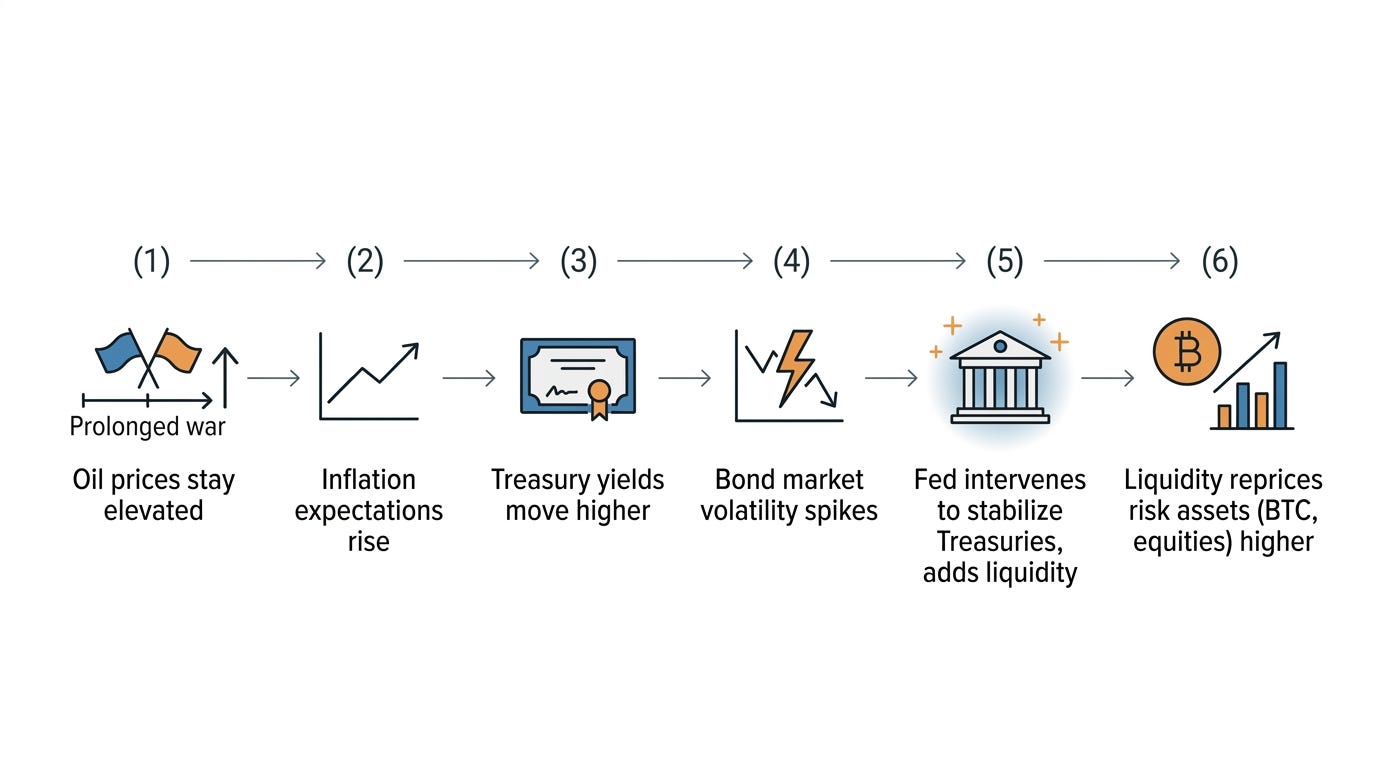
The pattern has precedent: the 1990 Gulf War, post-9/11, and the 2009 Afghanistan surge all coincided with Fed easing cycles. Brent is already up ~24% in a month to $85/bbl on Strait of Hormuz disruption, and the ISM manufacturing PMI came in at 52.4 for February, signaling expansion that complicates the near-term rate picture. Friday’s jobs miss (−92K, unemployment to 4.4%) shifted expectations forward, with June emerging as the earliest likely cut date and Polymarket odds for a June cut increasing.
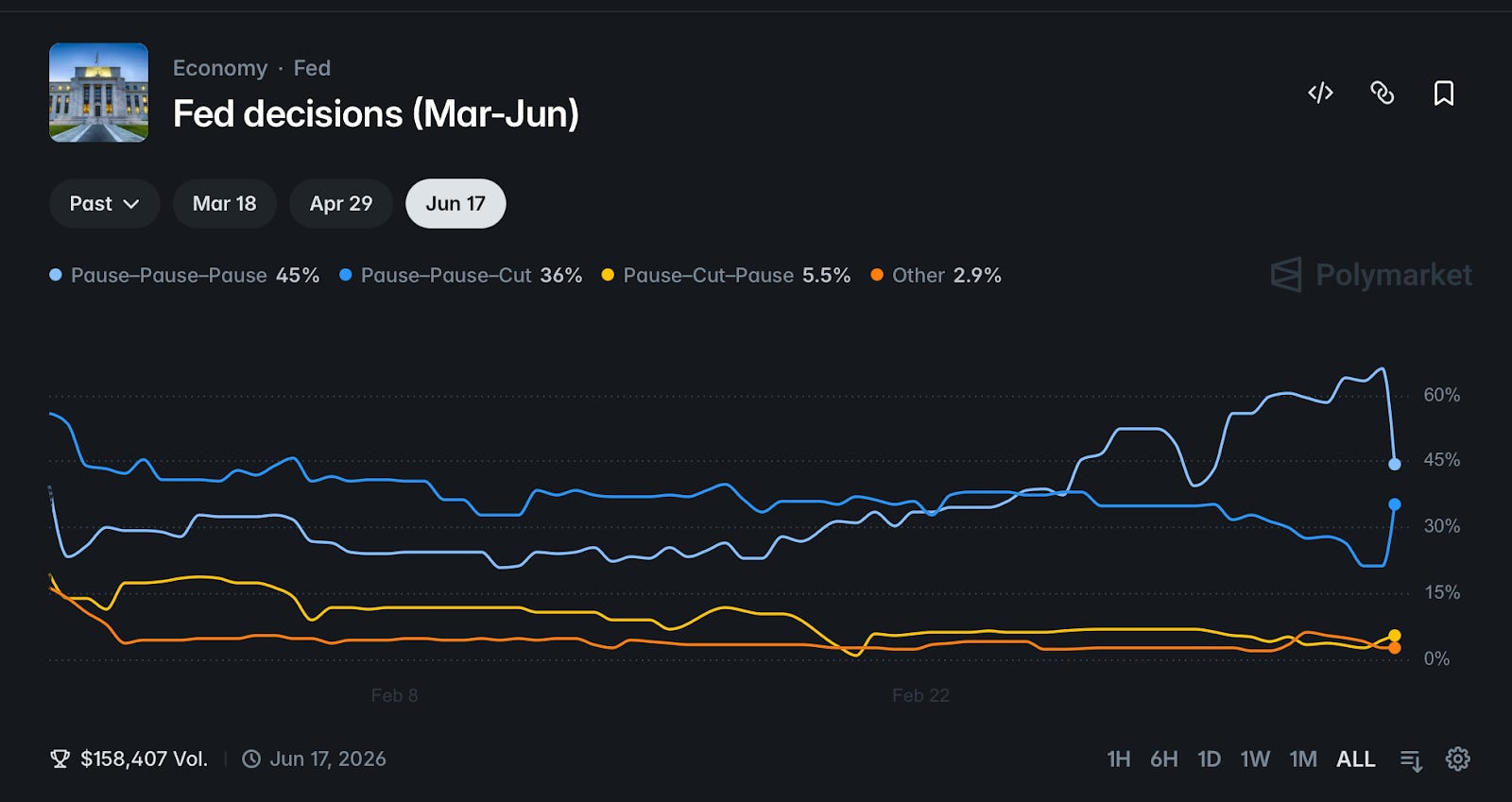
The oil-to-bond-volatility channel hasn’t triggered yet — the MOVE Index sits at ~75, well below the 130 level that has historically preceded Fed intervention. But Friday’s jobs miss opened a second path to the same destination: if the labor market is weakening, the Fed has cover to cut on growth grounds rather than waiting for a bond market dislocation. Both channels end with more liquidity — the difference is timing and the state of the economy when it arrives. The market is now pricing both possibilities simultaneously: oil-driven inflation risk that delays cuts, and labor market deterioration that accelerates them.
3. Strategy’s STRC saw explosive volume as shares traded above $100 par value.
Stretch, Strategy’s preferred stock recently hit $100 which allowed Strategy to use its at-the-market program to sell shares above the $100 par value to fund Bitcoin purchases. STRC saw strong activity in trading volumes reaching $778M in cumulative volume this week.
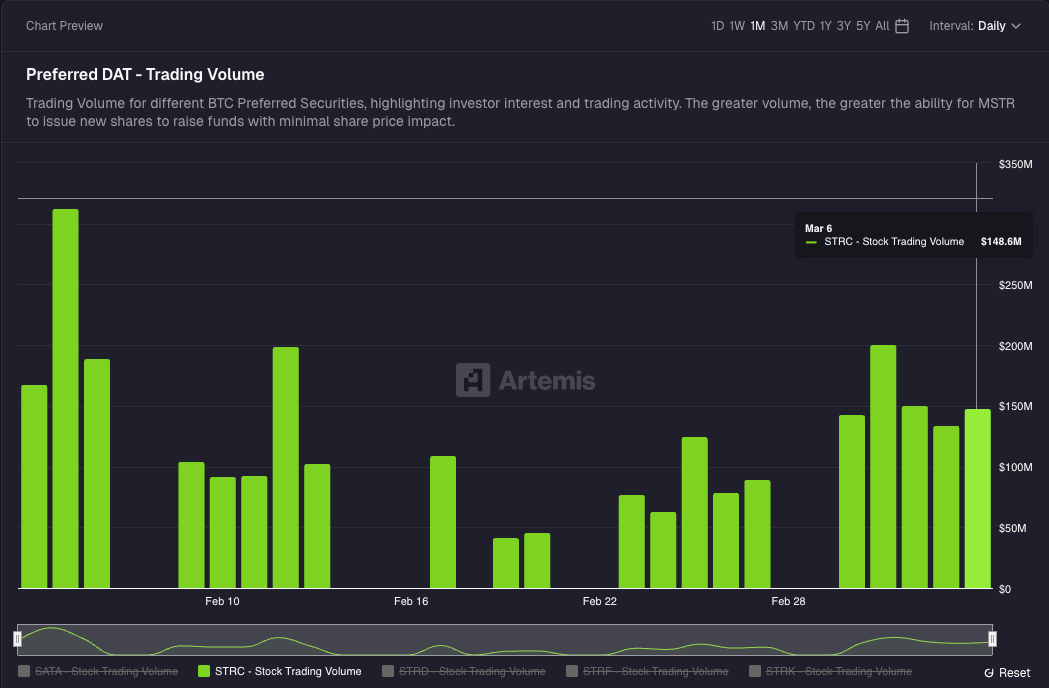
According to STRC tracking website strc.live, it is estimated that roughly 3,730 Bitcoin will be bought using purely STRC.
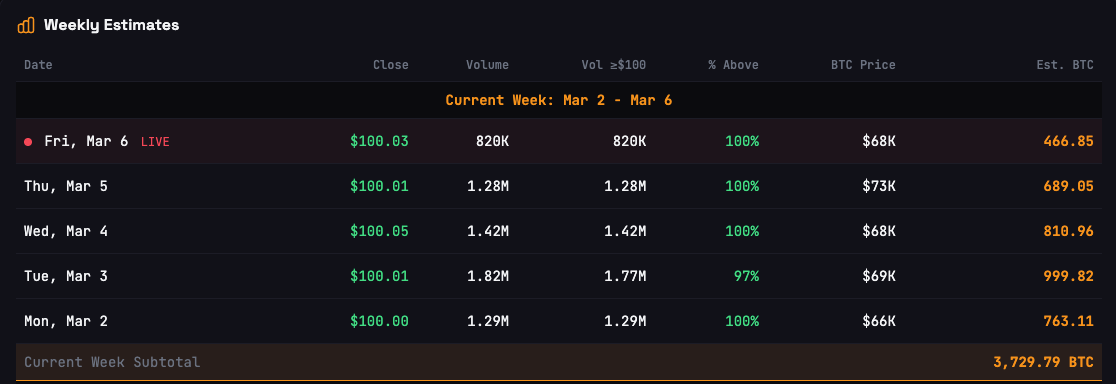
The success of STRC, which now has $3.47B notional value, displays the new playbook that DATs like Microstrategy are adopting. The shift is gradually away from convertible debt or purely Common stock ATMs, but instead through a combination of the preferreds and common stock. The Bitcoin accumulation machine seems to be unstoppable, with many analysts on X predicting a massive buy from Strategy next week.
Charts of the Week
Rapid-fire visual data points.
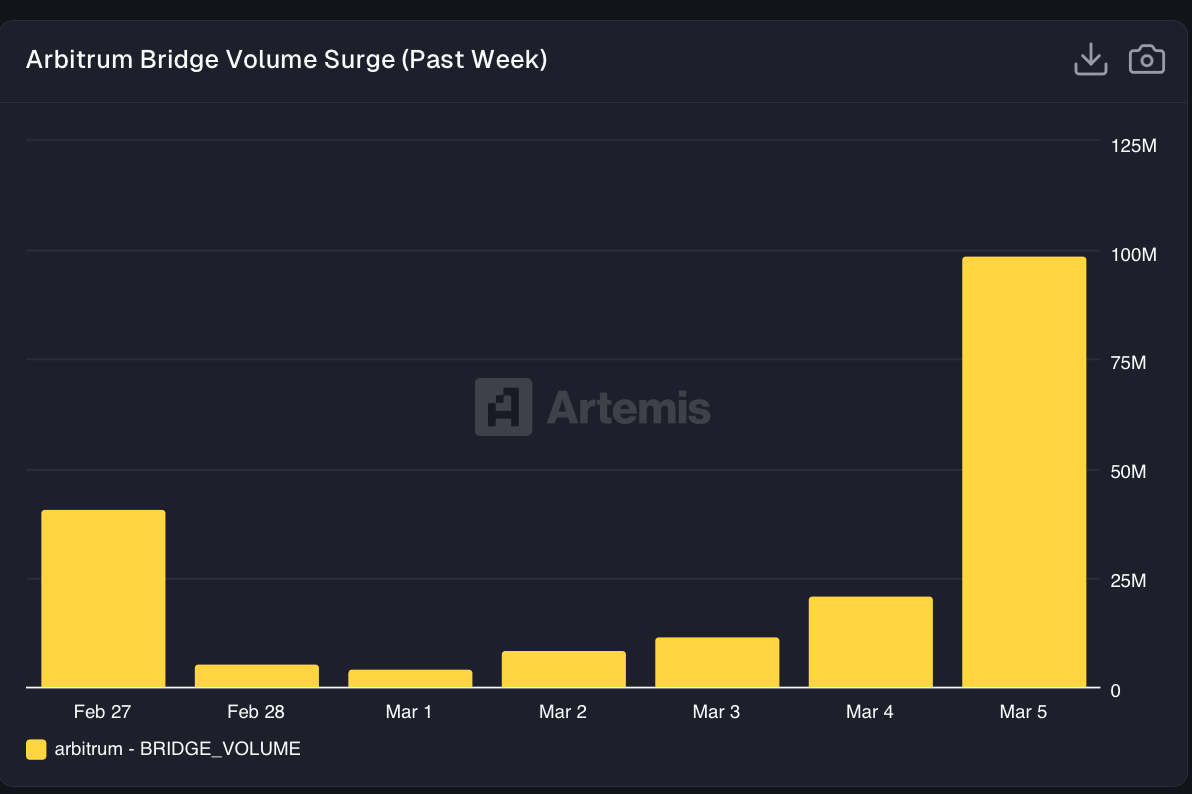
Arbitrum bridge volume surge — Arbitrum experienced a dramatic bridge volume spike, exploding from $15.1M on February 26 to $98.8M on March 5, a staggering +554% increase. The surge accelerated dramatically in the final 48 hours, jumping from $21M to nearly $99M, suggesting higher Hyperliquid interest
Other Notable News
CFTC to bring perps onshore. On March 3, CFTC Chairman Selig said the agency is working to bring “true perpetual futures” to the U.S. within the next month. Perps represent over 90% of global crypto derivatives volume but have existed almost entirely offshore.
SEC submits crypto securities framework to the White House. On March 3, the SEC sent Commission-level guidance on how federal securities laws apply to different types of crypto assets. More enforceable than staff memos and harder to reverse.
Fed, FDIC, OCC clarify tokenized securities treatment. Banking regulators confirmed that tokenized securities receive the same capital treatment as their traditional equivalents if they confer identical legal rights. Removes a key blocker for banks considering tokenization.
Solv Protocol exploited for ~$2.7M. A reentrancy attack drained 38 SolvBTC from a Bitcoin Reserve Offering vault via a double-minting flaw exploited 22 times. Solv offered a 10% bounty and said it will cover affected users.
Thanks for reading! Stay ahead this week by using the Artemis Terminal or pulling live data with =ART() in Excel.
Disclaimer: The authors of this content, as well as affiliates of Artemis Analytics, may have financial interests in the protocols or tokens mentioned. This does not constitute investment advice or a recommendation to buy, sell, or hold any asset. The information provided is for educational purposes only and should not be relied upon for financial, legal, or tax decisions. Readers should assess their own circumstances before making any financial choices. Views expressed may change without notice, and Artemis Analytics is not liable for any losses resulting from the use of this content.